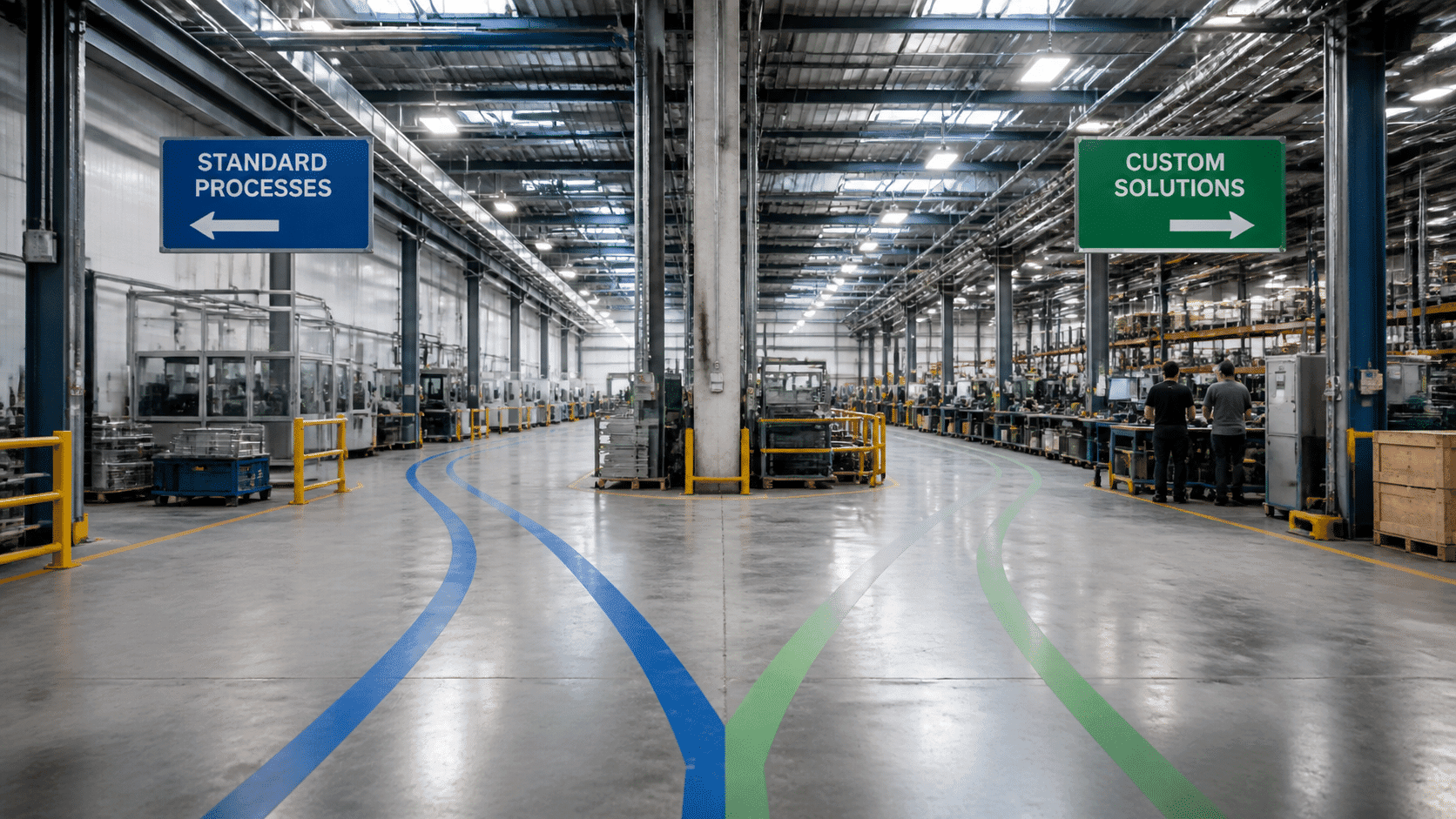
Introduction: Moving Beyond Traditional Software Development Failures
Ever seen a software project start with big hopes and end with a tired team, a blown budget, and a product nobody really wants? Yeah, we’ve all been there. The old Waterfall style can look neat on paper, but in real life it often means rigid plans, late feedback, and surprise costs that show up like an unwanted bill.
That’s where Agile comes in. It gives teams a way to build software in smaller steps, get feedback fast, and change course before things go off the rails. According to the Standish Group CHAOS Report, Agile projects succeed at a much higher rate than Waterfall projects, which is a big deal for any software engineering company trying to ship better work.
And this isn’t just theory. Modern teams at Amazon, Microsoft, and Google have all leaned into Agile thinking in different ways. In this article, we’ll break down what Agile really means, why it matters, and how a top software engineering company uses agile software development to deliver better results across the software development lifecycle.

Section 1: Deconstructing Agile - The Core Principles and Values
You know that feeling when a project looks perfect on a whiteboard, then falls apart the second real people touch it? That’s usually where Agile steps in.
Agile is not one magic process. It’s a mindset. A lot of software engineering company teams use agile methodologies in different ways, like Scrum in software engineering or Kanban, because the idea is simple: learn fast, adjust fast, and keep shipping useful work.
The 4 Agile values in plain English
The Agile Manifesto was written in 2001 by 17 people who wanted a better way than slow, heavy planning. It helped shape modern agile software development. Here’s what the four values mean in real life:
Agile value | Simple meaning | What it changes for software teams |
Individuals and interactions over processes and tools | People solve problems better than software boards do | Teams talk more, block less, and spot issues sooner |
Working software over comprehensive documentation | A useful product beats a giant doc nobody reads | Customers see real progress, not just slides |
Customer collaboration over contract negotiation | Keep talking to the client while building | Fewer surprises, better fit, less rework |
Responding to change over following a plan | Change is normal, so plan for it | Teams can shift before a bad idea gets expensive |
And no, this does not mean “no documentation” or “no planning.” That’s one of the biggest myths. Agile still needs notes, goals, and structure. It just skips the stuff that slows delivery without helping the product.
Iterative and incremental: tiny steps, big payoff
Waterfall usually goes in a straight line. Plan it all. Build it all. Test it all. Then hope it all works. Agile moves in loops instead. Build a small piece. Test it. Learn from it. Then build the next piece.
That’s the heart of iterative and incremental development. The product grows a little at a time, and each loop gives the team fresh feedback. Honestly, that’s a lot safer than waiting three months to find out the login flow is broken.
Why this matters for a software engineering company
A good software engineering company does not treat Agile like a rigid script. It’s a guide. That’s why different teams choose different frameworks. Some lean on Scrum for sprint planning and reviews. Others use Kanban for steady flow and quick turnaround.
As of the 2023 State of Agile report, Scrum is still the most common framework, which tells you something: teams like structure, but they also want room to move State of Agile report.
So if you’re hiring an agile team or working with software development agencies, ask how they adapt the process to the work. The best agile software development firm won’t just say “we do Agile.” They’ll explain how they use it to ship better software across the software development lifecycle.
Section 2: The Workhorses of Agile: Scrum vs. Kanban in Practice
Scrum and Kanban are kind of like two different roads to the same place. Both help a software engineering company ship better work. But they feel pretty different day to day.
And yes, teams argue about them a lot. Usually in a good way.
Scrum: clear roles, set rhythm
Scrum works well when a team needs structure. It uses three main roles:
Product Owner: decides what matters most
Scrum Master: helps the team stay on track
Development Team: builds the actual product
Then there are the events. Short names. Big impact.
Sprints: usually 1 to 2 weeks of focused work
Daily Stand-ups: quick check-ins so nobody stays stuck for long
Reviews: a look at what got built
Retrospectives: a team chat about what to fix next time
Scrum also has a few core artifacts:
Scrum artifact | What it is | Why it helps |
Product Backlog | A list of all possible work | Keeps priorities visible |
Sprint Backlog | The work chosen for this sprint | Gives the team a clear target |
Increment | The working piece finished in the sprint | Shows real progress |
A lot of teams like Scrum because it gives order without locking everything in forever. In the 2023 State of Agile report, Scrum was still the most used framework at about 87% adoption among Agile teams State of Agile report. That's a lot of teams choosing the same basic rhythm.
Kanban: flow first, less stop-and-start
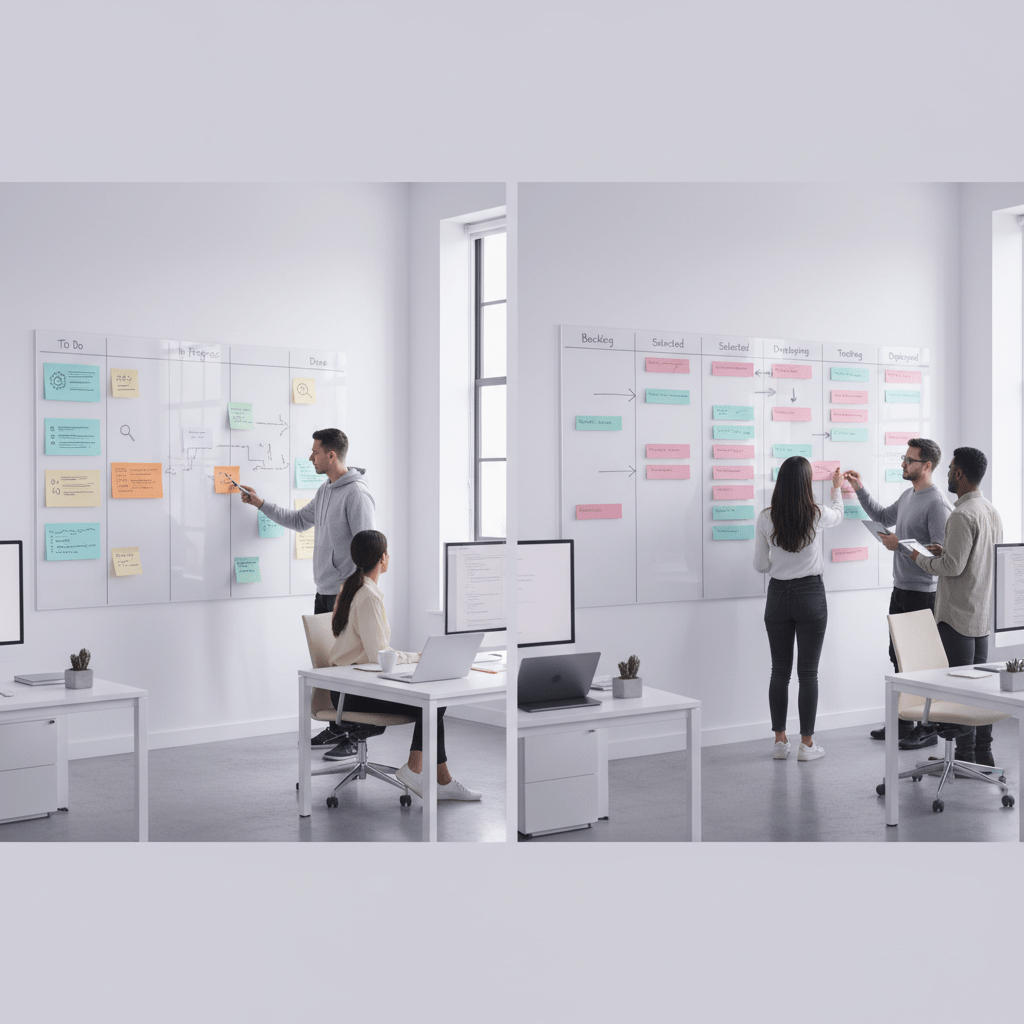
Kanban is simpler in some ways. It focuses on making work visible. You usually see tasks on a board with columns like To Do, In Progress, and Done.
The big idea is this: don’t start more work than the team can handle. That’s where Work In Progress, or WIP, limits come in. If too many tasks pile up, work slows down. People get busy, but not useful. Weird, right?
Kanban is great for flow-based work. Think bug fixes, support tickets, or a DevOps team that gets requests all day long. It fits maintenance work really well because the team can pull in new tasks as old ones finish.
So which one should a software engineering company pick?
Here’s the simple version:
Choose Scrum for new product development
Choose Kanban for maintenance, support, and steady delivery work
If you’re building a new app or SaaS platform, Scrum gives you planning, reviews, and frequent checkpoints. If you’re handling a bug queue or updating an internal system with random requests, Kanban usually feels smoother.
Actually, wait, there’s a better way to say it. Scrum works best when the team can commit to a sprint goal. Kanban works best when work shows up in a steady stream and needs fast turnarounds.
And this is where a strong software engineering company earns trust. They won’t force one framework on every team. They’ll match the method to the work, whether they’re helping with agile software development, software development lifecycle planning, or a bigger modernization push.
If you’re hiring an agile team, ask them one plain question: Why did you pick Scrum or Kanban for this project? A good answer should sound practical, not buzzwordy. That’s usually the sign you’re talking to an agile software development firm that actually gets the job done.
Section 3: The Business Impact: Quantifiable Benefits of Agile Software Development
You can feel it pretty fast. A team starts shipping small pieces, users react, and suddenly the work has a pulse.
That’s one of the biggest benefits of agile software development. Instead of waiting months for one giant release, a software engineering company can deliver working features in smaller chunks. That means value shows up sooner, and feedback does too. No guessing for half a year. No weird “we think this is right” meetings.
The numbers back it up. The 2020 CHAOS Report found Agile projects succeed at 42% versus 13% for Waterfall, while Waterfall fails at 21% compared with 8% for Agile Standish Group CHAOS Report. That’s a pretty loud signal for any software engineering company trying to reduce risk.
1. Faster time-to-market
This is the one leaders love first. And honestly, I get it.
When a team ships an MVP, a feature slice, or a testable release, the business can start learning right away. Maybe users want a simpler checkout flow. Maybe they ignore the feature you thought would be the star. Better to find out in week 2 than month 6.
That faster loop helps software development agencies and product teams spot what works before money gets burned on the wrong thing. It also lines up with the real benefits of agile: 76% of teams in the 2023 State of Agile report said faster time-to-market was a top win.
2. Better quality and less risk
Agile helps catch messes early. Which, let’s be real, is way nicer than finding them in production at 4:55 on a Friday.
Frequent feedback, automated testing, and continuous integration all help here. Small changes are easier to check. Bugs are smaller. Fixes are cheaper. That’s why agile project management usually lowers the chance of one bad build turning into a whole project meltdown.
And the process keeps teams honest. If something breaks, the team sees it fast, talks about it, and adjusts. That’s a lot healthier than crossing fingers and hoping the final test phase goes well.
3. Happier stakeholders and stronger ROI
People like seeing progress. Shocking, I know.
Regular demos give stakeholders a clear view of what’s being built. They can speak up early, suggest changes, and keep the product tied to business goals. That matters a lot if you’re hiring an agile team to modernize a legacy system or build something new for a crowded market.
It also helps with return on investment. If the team builds the right thing sooner, the business can start using it sooner. And if a feature no longer makes sense, the team can shift without ripping up the whole plan.
A lot of companies, including Buildera’s clients, want that kind of speed without losing control. That’s where a strong agile software development firm stands out. They don’t just ship code. They help the business make better calls, with less waste, across the software development lifecycle.
Business win | What Agile changes |
Faster launch | Smaller releases go live sooner |
Lower risk | Problems show up earlier |
Better ROI | Less waste, more useful work |
Happier teams | Less chaos, more focus |
And that’s the real payoff. Not buzzwords. Not ceremony for ceremony’s sake. Just better software, sooner.
If your team is stuck in long release cycles, it might be time to talk with Buildera about a practical Agile plan that fits your product, your people, and your goals.
Section 4: Inside a Modern Software Engineering Company: How Agile Comes to Life
You know that Monday feeling when everybody’s staring at the board, coffee in hand, trying to remember what actually got done last week? That’s usually where Agile starts to feel real.
Inside a software engineering company, a sprint is less about big speeches and more about steady motion. The week often starts with sprint planning. The team looks at the backlog, picks a chunk of work, and agrees on what can really get finished. Not what sounds nice. What can ship.
Here’s the usual rhythm:
Sprint planning: The team picks the work for the next 1 to 2 weeks
Daily stand-ups: Short check-ins to spot blockers fast
Backlog refinement: The Product Owner and team tighten up upcoming work
Sprint review: The team shows real progress to stakeholders
Retrospective: The team talks about what went well and what needs a fix
Simple on paper. A little messier in real life. But that’s the point.
The Product Owner is the voice of priority. They decide what matters most, and they keep the backlog from turning into a random wish list. The Scrum Master, on the other hand, helps the team keep moving. They clear roadblocks, protect the sprint, and make sure Agile doesn’t turn into what some folks call "Agile-fall". You know, the version where teams keep the ceremonies but still work like Waterfall. Yikes.
A modern agile software development firm also leans on tools that keep everyone in sync. Jira is usually where the work lives. Confluence holds notes, decisions, and user stories. Slack or Microsoft Teams keeps the quick questions moving without five extra meetings. And if the team is shipping code often, GitHub or GitLab usually sits right next to that workflow.
That stack matters more than people think. It gives the software development lifecycle some rhythm. It also makes agile project management visible, which helps when you’re hiring an agile team or working with software development agencies that need to stay aligned with your internal people.
By the way, the basic user story format is still one of the cleanest ways to keep work human: “As a [type of user], I want [a goal], so that [a benefit].” It sounds almost too simple. But it works.
And if you’re choosing a partner like Buildera, ask how they run this week-by-week flow in real life. A strong software engineering company won’t just say they use agile methodologies. They’ll show you how the people, tools, and habits all work together to ship better software.
Section 5: Overcoming the Hurdles: Common Agile Implementation Challenges
You know what trips teams up the most? It’s usually not the tools. It’s the people stuff.
The biggest wall is cultural resistance. A lot of teams say they want Agile, but old habits hang on tight. Managers still want big upfront plans. Teams still want every requirement frozen before work starts. And then everyone wonders why the sprint feels like a tiny Waterfall project in a hoodie.
The 2023 State of Agile report puts organizational culture at odds with Agile values at the top of the barrier list, at 46% State of Agile report. That lines up with what many software engineering company teams run into. So the fix starts with mindset. Leaders need to talk less about control and more about learning. Small wins help too. A pilot team, a clear Product Owner, and short feedback loops can show people that Agile software development is not chaos. It’s a smarter rhythm.
Then there’s Agile-fall or Scrum-fall. Same bad joke, different outfit. This happens when teams hold sprints and standups, but still do big design first, lock scope too early, and wait until the end to get feedback. So the sprint looks Agile on paper, but the work still moves like a slow waterfall. The fix? Make sure every sprint ends with something shippable. Real feedback. Real progress. No fake finish lines.
One more trap: using velocity like it’s a performance score. It’s not. Velocity is best for forecasting and planning, not pressuring people. If a team’s velocity jumps around, that doesn’t always mean they’re doing worse. Sometimes they just got smarter about estimating. Or maybe they ran into hidden work. That happens. Use velocity with burndown charts, review trends over time, and talk about process changes in retrospectives. That’s where the real value is.
If you’re hiring an agile team or working with software development agencies, ask how they handle these problems before they start. A good agile software development firm won’t just promise speed. They’ll explain how they build trust, protect quality, and keep the software development lifecycle moving without turning Agile into theater.

Conclusion: Choosing a Truly Agile Software Engineering Partner
Agile isn’t just a process. It’s a better way to build with people, not at them. And that makes a big difference.
We’ve seen the pattern here: smaller steps, faster feedback, less waste, happier teams, and better software. The data backs it up too. The 2020 CHAOS Report found Agile projects succeed at 42% compared with 13% for Waterfall. That’s not a tiny gap. That’s a giant clue.
So if you’re picking a software engineering company, don’t just listen for Agile buzzwords. Look for proof.
Quick checklist for vetting an Agile partner
Do they show working software every sprint?
Can they explain their sprint planning, reviews, and retrospectives in plain English?
Do they welcome feedback mid-project, or act like the scope is carved in stone?
Is the Product Owner active, or missing in action?
Do they use velocity for planning, not pressure?
Will they talk about quality, testing, and the Definition of Done without getting vague?
And here’s the part that matters most. A real agile software development firm should feel steady, open, and easy to talk to. Not chaotic. Not flashy. Just clear.
Buildera takes that kind of approach with custom software development, product engineering, and legacy application modernization, helping teams move faster without losing sight of the real goal: software that works for your business and your users.
If you’re hiring an agile team, ask the hard questions now. It saves a lot of headache later.
Ready to build software that actually works for your business?
Free discovery call · 15 minutes · No obligation